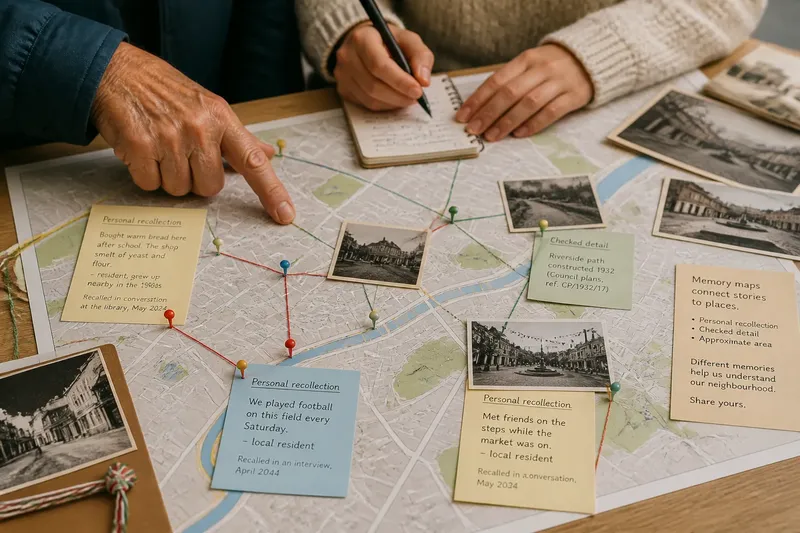
A Borrowing Table for a One-Day Neighbourhood Event
A borrowing table for a one-day neighbourhood event keeps shared gear findable, returns clear and handovers manageable without creating a permanent scheme.

Someone arrives at the community hall carrying a tray of mugs, while a neighbour asks where the spare extension lead has gone. A borrowing table for a one-day neighbourhood event can make these small exchanges feel straightforward—but only if people can tell what is available, where it belongs afterwards and who is responsible for the handover.
The aim is not to build a library of things. It is to give useful objects a simple route from their owner to the event and back again, with as little guesswork as possible. Most problems begin when one part of that route is left vague.
Items have no clear purpose
A box of assorted household bits can look generous, yet leave visitors unsure what is actually being offered. A roll of tape, a stack of serving plates and a half-used marker each invite different questions about suitability, quantity and condition.
Choose items for a specific event task rather than accepting everything that might conceivably come in handy. For a hall lunch, that might mean clean serving utensils, washable tablecloths and a clearly identified jug. Keep the table’s purpose visible in a short sign, such as “Borrowable serving kit for today’s shared lunch”.
Before setting anything out, check that each item is clean, intact enough for its intended use and suitable for the event. Leave out anything that needs specialist handling, has an unclear owner or could be mistaken for rubbish. If the event depends on an item being present, arrange a dependable supply separately instead of treating a neighbour’s offer as essential equipment.
Labels do not answer enough
A label saying “plates” identifies a type of object, not the terms of borrowing. Visitors may still wonder whether they can take the whole stack, whether it is for use inside the hall or where to put it when finished.
Give each item or grouped set a label that answers the practical questions in a few words:
- What it is: “Blue serving jug” is easier to match than “kitchen item”.
- What may be borrowed: State whether a set is one group or whether pieces can be taken separately.
- Where it is used: Add a simple boundary if the item should stay in the venue.
- Where it returns: Name the return point, such as “return to the blue crate by the exit”.
- Who receives it: Give a role or named person for the handback, with a clear way to find them at the event.
Use large writing and wording that remains readable from the front of the table. Coloured tape can help match an item to its crate, but do not make colour carry information on its own: write the destination as well. A strip of masking tape and a marker are usually enough; decorative tags are not worth the extra effort if they make the instructions harder to read.
Returns drift elsewhere
“Put it back when you’re done” sounds simple until the event gets busy. A mug ends up by the sink, a cloth is folded over a chair and a serving spoon disappears into the clean-up tub. People have followed the instruction as they understood it; the return route was not specific enough.
Set one return point that is easy to spot and distinct from rubbish, washing-up and other supplies. A sturdy crate, tray or clearly marked table corner can work. Put the return point where people naturally leave the activity, rather than in a staff-only room or behind a screen.
For items that need to remain in the room, say so on the label and make the return spot visible nearby. For items going home with their owners, use a separate, clearly marked collection area so they do not become mixed with borrowed gear. Avoid a pile labelled only “returns”: several piles can look alike once chairs move and the room fills.
Ownership gets muddled
Borrowed objects often resemble the venue’s own supplies. If a set of plain tumblers sits beside the kitchen’s tumblers, someone clearing up may put both away together, while the lender later has no reason to know which set went where.
Keep contributed items together or mark them discreetly with removable tape. Record the owner’s name beside the item, not just on a note kept in someone’s pocket. A small paper list can track the item, owner and return arrangement; it does not need to become a sign-out database.
Say you have a borrowed blue jug and a stack of white plates for a neighbourhood tea. You could write “Blue jug — return to green crate; hand to Mina at the welcome desk” on a removable label, then note “jug — Mina’s neighbour” on the table sheet. At the end, the crate gives everyone a visible destination, while the note helps the named handoff identify the right object. This is an invented arrangement, not a reason to collect personal details beyond what the return needs.
One person becomes the whole system
A table can look organised while quietly depending on one volunteer to explain every label, remember every owner and chase every return. When that person is serving food or greeting late arrivals, visitors may bypass the table or leave things wherever they can.
Assign a named handoff for the opening and another for the close if one person cannot be available throughout. The opening handoff checks that items and labels match; the closing handoff checks the return point and reconnects items with their owners. If the same person covers both, say so plainly and identify where they can be found.
Keep the task bounded. The handoff person is not automatically responsible for lending personal tools, repairing damaged goods or locating an absent owner days later. For an item whose use needs explanation, put the basic instruction beside it or leave it out; do not turn the table volunteer into an all-purpose help desk.
People cannot tell what is available
Sometimes the gear is present but hidden under a cloth, stacked behind the serving line or mixed with decorations. Visitors may assume it is private stock, or they may ask the nearest volunteer for permission each time.
Place the table where people can approach without crossing a busy queue. Keep borrowed items together, with the sign facing the approach, and leave enough room to see labels before picking anything up. Separate items ready to borrow from those awaiting return or collection; a simple sign on each area is clearer than relying on the arrangement to speak for itself.
If the table is near food or drink, protect the items from spills and keep it out of the way of service. If the venue has access or fire-safety requirements, follow its instructions rather than improvising around a doorway or route. That decision belongs to the venue’s responsible staff, not to the borrowing-table plan.
Damage or loss feels awkward
People can hesitate to borrow something if they do not know what to do when it gets marked or broken. Lenders may feel uneasy too, especially when an item’s condition was never made clear at the start.
Before the event, agree with each lender which objects are suitable for shared use and whether ordinary wear is acceptable. Leave fragile, sentimental or costly-to-replace belongings at home. A short sign can say, “Please tell the handoff volunteer about damage or missing parts before leaving,” without turning the table into a legal agreement.
Do not promise replacement or compensation unless the organiser has actually arranged for it and knows what applies. For concerns about responsibility, insurance or venue rules, ask the relevant organiser or a qualified adviser rather than making an assurance at the table. The practical aim is to make reporting easy, not to settle every possible dispute in advance.
What needs sorting first?
Should visitors sign items out?
For a small, visible table of low-risk items that stay in the venue, a clear label and return point may be enough. Use a simple tick sheet only if the event needs to distinguish who took which item or track a handback that cannot happen in the room.
Can someone borrow an item off-site?
Only offer off-site borrowing if the owner has agreed to it and the return arrangement is explicit. If the owner expects the item back before the event closes, mark “use here only” instead of leaving the boundary to be inferred.
What if an owner leaves early?
Agree on the handback before the item arrives: the owner might collect it from a named closing volunteer, or another named person might return it later. If neither arrangement is settled, do not put that item on the table.
What belongs on the table sign?
State that items are available for the event, explain where borrowed items go and name the handoff person or their location. Put item-specific directions on individual labels so the main sign stays legible and does not have to list every object.
Closing becomes a scramble
When the event ends, borrowed objects can be mixed with rubbish, venue stock and belongings people are carrying home. A last-minute announcement cannot fix labels that have fallen off or items whose owners were never recorded.
Give the closing handoff a clear sequence: gather items at the marked return point, match them against the table sheet, then pass them to their owners or the agreed return person. Keep unclaimed objects in a named holding place and tell the organiser who has them; do not leave a loose box for someone to discover after the hall is locked.
For anything still missing, note what is absent and who is handling the follow-up. Keep that task within the event’s arrangements and close it when the item is returned or the owner has been contacted. A borrowing table for a one-day neighbourhood event works best when its final job is as visible as its first: every item has a destination, and someone knows who is handing it over.